Why This Lab Is Important
+
Female hormone balance is influenced by many interconnected factors, including how hormones are produced, converted and regulated throughout the body, as well as adrenal function and overall health. During perimenopause and menopause, these interactions often become more complex, making comprehensive testing especially valuable. For women seeking a deeper understanding of hormone balance—particularly when symptoms persist—Dr. Passero recommends the Durable FEMALE PREMIUM panel.*
This expanded panel builds on the Durable FEMALE ESSENTIAL panel by measuring estradiol, progesterone, testosterone, DHEA, FSH and LH, while also including additional markers that provide deeper insight into hormone regulation, adrenal function and overall metabolic health. These include total estrogens, pregnenolone, SHBG, ferritin and cortisol, along with a CBC and CMP, which together include multiple additional markers that help evaluate overall health.*
Markers such as pregnenolone and cortisol provide insight into adrenal function and the body’s stress response, which can significantly influence hormone balance, energy levels and mood. SHBG helps regulate how much active hormone is available in the body, offering important context for interpreting estrogen and testosterone levels. Ferritin, a marker of iron stores, is especially relevant for women due to menstrual blood loss and its role in energy and overall vitality. The inclusion of CBC and CMP adds broader context by evaluating markers related to blood health, metabolism, liver function and overall physiological balance—factors that can influence how hormones are produced, metabolized and utilized.*
Important timing note for cycling women: Because hormone levels fluctuate significantly across the menstrual cycle, results are most meaningful when testing is done at the appropriate time. For most cycling women, hormone testing is typically recommended about 7 days after ovulation (around days 19–23 of a 28-day cycle). Women with PCOS may benefit from testing earlier in the cycle (days 2–4). Women in menopause or with infrequent cycles can test at any time.
Dr. Passero recommends the Durable FEMALE PREMIUM panel for anyone seeking to:*
What’s Included in the Durable FEMALE PREMIUM Panel
This panel tests for the following key markers that influence female hormone health:*
What to Expect After Ordering Your Lab Test
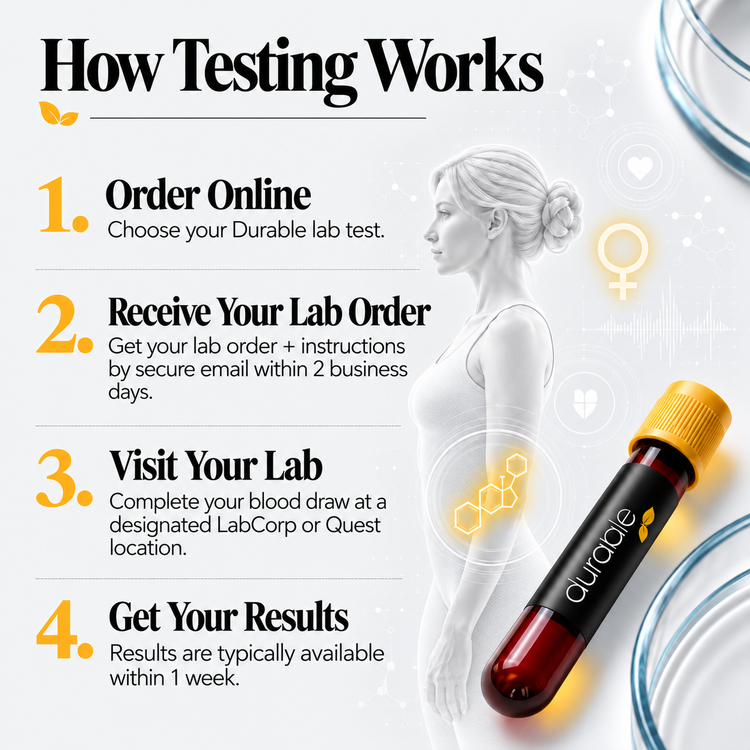
After purchasing a lab test from Durable, you’ll receive an order confirmation right away. Your lab order will be emailed separately within two business days. All lab-related communications—including your lab order, instructions and results notifications—are sent via encrypted, HIPAA-compliant email from labs@livedurable.com. To ensure timely delivery, we recommend adding this address to your contacts and checking your spam or promotions folder.
Lab Locations
We've partnered with LabCorp and Quest Diagnostics for convenient blood draw locations nationwide. Once your lab order is emailed to you, it will designate the most convenient location based on your address. You should contact the lab directly to schedule an appointment, and we recommend having your blood draw performed within 2-4 weeks. If you have any concerns about the selected location, please email labs@livedurable.com to explore alternative options.
Timing of Results
Once your blood draw is complete, most results are available within one week. You’ll receive an email notification from labs@livedurable.com when your results are ready to review.
How to Interpret Results
All test results include a lab-generated reference range reflecting values commonly seen in a healthy population. Results are flagged only when they fall outside this range as high or low. While these reference ranges provide helpful context, results are best interpreted alongside your health history, symptoms and trends over time and should be reviewed with your healthcare practitioner.
If you are interested in a virtual lab review with Dr. Passero, you may email his office at GetHealthy@DrKevinPassero.com to schedule an appointment.
This expanded panel builds on the Durable FEMALE ESSENTIAL panel by measuring estradiol, progesterone, testosterone, DHEA, FSH and LH, while also including additional markers that provide deeper insight into hormone regulation, adrenal function and overall metabolic health. These include total estrogens, pregnenolone, SHBG, ferritin and cortisol, along with a CBC and CMP, which together include multiple additional markers that help evaluate overall health.*
Markers such as pregnenolone and cortisol provide insight into adrenal function and the body’s stress response, which can significantly influence hormone balance, energy levels and mood. SHBG helps regulate how much active hormone is available in the body, offering important context for interpreting estrogen and testosterone levels. Ferritin, a marker of iron stores, is especially relevant for women due to menstrual blood loss and its role in energy and overall vitality. The inclusion of CBC and CMP adds broader context by evaluating markers related to blood health, metabolism, liver function and overall physiological balance—factors that can influence how hormones are produced, metabolized and utilized.*
Important timing note for cycling women: Because hormone levels fluctuate significantly across the menstrual cycle, results are most meaningful when testing is done at the appropriate time. For most cycling women, hormone testing is typically recommended about 7 days after ovulation (around days 19–23 of a 28-day cycle). Women with PCOS may benefit from testing earlier in the cycle (days 2–4). Women in menopause or with infrequent cycles can test at any time.
Dr. Passero recommends the Durable FEMALE PREMIUM panel for anyone seeking to:*
- Go beyond foundational hormone testing to evaluate hormone regulation and adrenal function
- Evaluate whether hormone changes may be contributing to symptoms such as mood changes, fatigue, metabolic changes or cycle changes
- Assess factors such as cortisol, iron status and hormone binding that may influence hormonal balance
- Monitor hormone patterns over time as part of a personalized wellness approach
What’s Included in the Durable FEMALE PREMIUM Panel
This panel tests for the following key markers that influence female hormone health:*
- Estradiol (E2)—Estradiol is the primary form of estrogen during the reproductive years and plays a major role in cycle regulation, bone health, mood and metabolic function. Measuring estradiol helps assess estrogen patterns that often shift during perimenopause.
- Progesterone—Progesterone is essential for ovulation, menstrual cycle balance and healthy pregnancy. Changes in progesterone are common in early perimenopause and can contribute to cycle irregularity, sleep disruption and PMS-like symptoms.
- Total Testosterone—Testosterone supports libido, motivation, lean muscle maintenance and overall vitality in women. Measuring total testosterone provides a broad view of androgen production and hormonal balance.
- DHEA (Dehydroepiandrosterone)—DHEA is an adrenal hormone that serves as a precursor to both testosterone and estrogen. It offers insight into adrenal function, energy regulation and overall hormone resilience.
- FSH & LH (Follicle-Stimulating Hormone and Luteinizing Hormone)—FSH and LH are pituitary hormones that regulate ovarian function and reproductive signaling. These markers are especially useful during perimenopause and menopause, when rising levels can reflect changes in ovarian hormone production.
- Total Estrogens—Total estrogens measure the combined levels of different estrogen forms circulating in the body—estrone, estradiol and estriol—providing a broader view of overall estrogen activity. Because each form of estrogen serves a distinct role, assessing them together offers deeper insight when evaluating menstrual irregularities, fertility concerns, menopausal transitions, hormonal imbalances and certain endocrine conditions.
- Pregnenolone—Pregnenolone is often referred to as the “parent” hormone because it serves as the precursor from which many other hormones—including progesterone, estrogen, testosterone and cortisol—are produced. Measuring pregnenolone provides insight into the body’s overall hormone production pathways and can help identify whether hormone imbalances may be related to limitations in hormone synthesis or adrenal function.
- SHBG (Sex Hormone Binding Globulin)—SHBG is a protein that binds to hormones such as estrogen and testosterone, regulating how much of these hormones are available in their active, usable form. Even when total hormone levels appear normal, imbalances in SHBG can affect how much hormone is actually accessible to tissues. Measuring SHBG provides important context for interpreting hormone levels and understanding overall hormone availability and balance.
- AM Cortisol—Cortisol is a key stress hormone produced by the adrenal glands that helps regulate metabolism and the body’s response to stress. Because cortisol follows a natural daily rhythm—typically highest in the morning—measuring levels early in the day provides important insight into adrenal function and baseline cortisol production. Imbalances in cortisol can influence energy levels, mood, sleep patterns and overall hormone balance.
- Ferritin—Ferritin reflects the body’s stored iron and is considered the most reliable marker for detecting iron deficiency. Adequate iron stores are essential for oxygen transport, energy production and overall vitality. Low ferritin levels are common in women due to menstrual blood loss and may contribute to fatigue, reduced exercise tolerance and changes in overall well-being.
- CMP (Comprehensive Metabolic Panel)—The CMP includes 14 individual tests that provide insight into metabolic health, liver function, kidney function and electrolyte balance. Many of these markers are closely connected to hormone health, as they reflect how the body processes nutrients, supports detoxification pathways and maintains overall physiological balance. Evaluating these systems alongside hormone levels helps provide a more complete picture of how the body is functioning and adapting to hormonal changes.
- CBC (Complete Blood Count)—The CBC includes 14 individual tests that evaluate red blood cells, white blood cells, platelets and overall blood health. These markers provide insight into oxygen delivery, immune function and underlying factors that may influence energy levels, resilience and overall well-being. Because blood health plays a key role in how the body responds to hormonal changes, the CBC adds important context when evaluating fatigue, immune function and physiological balance.
What to Expect After Ordering Your Lab Test
After purchasing a lab test from Durable, you’ll receive an order confirmation right away. Your lab order will be emailed separately within two business days. All lab-related communications—including your lab order, instructions and results notifications—are sent via encrypted, HIPAA-compliant email from labs@livedurable.com. To ensure timely delivery, we recommend adding this address to your contacts and checking your spam or promotions folder.
Lab Locations
We've partnered with LabCorp and Quest Diagnostics for convenient blood draw locations nationwide. Once your lab order is emailed to you, it will designate the most convenient location based on your address. You should contact the lab directly to schedule an appointment, and we recommend having your blood draw performed within 2-4 weeks. If you have any concerns about the selected location, please email labs@livedurable.com to explore alternative options.
Timing of Results
Once your blood draw is complete, most results are available within one week. You’ll receive an email notification from labs@livedurable.com when your results are ready to review.
How to Interpret Results
All test results include a lab-generated reference range reflecting values commonly seen in a healthy population. Results are flagged only when they fall outside this range as high or low. While these reference ranges provide helpful context, results are best interpreted alongside your health history, symptoms and trends over time and should be reviewed with your healthcare practitioner.
If you are interested in a virtual lab review with Dr. Passero, you may email his office at GetHealthy@DrKevinPassero.com to schedule an appointment.
Lab-Specific FAQs
+
What does the Durable FEMALE PREMIUM panel test for?
Estradiol, progesterone, total testosterone, DHEA, FSH & LH, total estrogens, pregnenolone, SHBG, AM cortisol, ferritin, CMP and CBC.*
Do I need to fast or follow any special instructions prior to this test?
The Durable FEMALE PREMIUM panel does not require fasting prior to testing, but it is recommended that the blood draw is completed before 9:00AM as hormone levels (especially cortisol) can fluctuate significantly throughout the day. For most cycling women, hormone testing is typically recommended about 7 days after ovulation (around days 19-23 of a 28-day cycle). Women with PCOS may benefit from testing earlier in the cycle (days 2-4). Women in menopause or with infrequent cycles can test at any time.*
Can I take medications beforehand?
Yes. Most medications do not interfere with the tests in this panel. Do not stop medications unless directed by your healthcare practitioner.*
Will recent diet or alcohol intake affect my results?
No. Short-term dietary choices or alcohol intake do not significantly influence the markers included in this panel.*
How often should I get this test?
Dr. Passero recommends routine monitoring of these markers, with testing every 3-6 months for most adults. Re-testing at the recommended interval allows you and your healthcare practitioner to monitor trends over time, assess how your body is responding to lifestyle or nutritional changes and make informed adjustments. Testing frequency should be individualized based on risk factors, clinical context and your doctor’s recommendations.*
Does insurance cover the cost of my tests?
Lab tests must be paid for in full at checkout using a credit card, a supported payment platform (such as Shop Pay, PayPal, Google Pay or Venmo), or an eligible FSA/HSA debit card. In some cases, health insurance providers may reimburse individuals for lab testing. You can contact your insurance provider directly to determine whether reimbursement is available. Please note that Durable is unable to provide insurance paperwork or assist with claim submission.
Can I get a refund if I choose not to get my lab work?
Yes. You may request a refund within 365 days of purchase, as long as you have not visited the lab and had your blood drawn.
Can I use a coupon when purchasing my lab test?
At this time, promotions and coupons cannot be applied to lab testing. Lab pricing reflects the cost of clinical testing and processing, and discounts are not available for these services. However, you can redeem Durable REWARDS points at checkout, and when you purchase a lab order, you’ll earn additional points.
Is this blood test for adults only?
Durable lab testing is intended for adults 18 years and older. Testing for individuals under 18 is only recommended when directed by a qualified healthcare provider.*
Estradiol, progesterone, total testosterone, DHEA, FSH & LH, total estrogens, pregnenolone, SHBG, AM cortisol, ferritin, CMP and CBC.*
Do I need to fast or follow any special instructions prior to this test?
The Durable FEMALE PREMIUM panel does not require fasting prior to testing, but it is recommended that the blood draw is completed before 9:00AM as hormone levels (especially cortisol) can fluctuate significantly throughout the day. For most cycling women, hormone testing is typically recommended about 7 days after ovulation (around days 19-23 of a 28-day cycle). Women with PCOS may benefit from testing earlier in the cycle (days 2-4). Women in menopause or with infrequent cycles can test at any time.*
Can I take medications beforehand?
Yes. Most medications do not interfere with the tests in this panel. Do not stop medications unless directed by your healthcare practitioner.*
Will recent diet or alcohol intake affect my results?
No. Short-term dietary choices or alcohol intake do not significantly influence the markers included in this panel.*
How often should I get this test?
Dr. Passero recommends routine monitoring of these markers, with testing every 3-6 months for most adults. Re-testing at the recommended interval allows you and your healthcare practitioner to monitor trends over time, assess how your body is responding to lifestyle or nutritional changes and make informed adjustments. Testing frequency should be individualized based on risk factors, clinical context and your doctor’s recommendations.*
Does insurance cover the cost of my tests?
Lab tests must be paid for in full at checkout using a credit card, a supported payment platform (such as Shop Pay, PayPal, Google Pay or Venmo), or an eligible FSA/HSA debit card. In some cases, health insurance providers may reimburse individuals for lab testing. You can contact your insurance provider directly to determine whether reimbursement is available. Please note that Durable is unable to provide insurance paperwork or assist with claim submission.
Can I get a refund if I choose not to get my lab work?
Yes. You may request a refund within 365 days of purchase, as long as you have not visited the lab and had your blood drawn.
Can I use a coupon when purchasing my lab test?
At this time, promotions and coupons cannot be applied to lab testing. Lab pricing reflects the cost of clinical testing and processing, and discounts are not available for these services. However, you can redeem Durable REWARDS points at checkout, and when you purchase a lab order, you’ll earn additional points.
Is this blood test for adults only?
Durable lab testing is intended for adults 18 years and older. Testing for individuals under 18 is only recommended when directed by a qualified healthcare provider.*
Durable FEMALE PREMIUM Panel®
Dr. Passero recommends this expanded panel to further evaluate hormone regulation during perimenopause or menopause by assessing core hormones alongside markers like total estrogens, pregnenolone, SHBG, cortisol and ferritin—supporting more informed decisions around hormonal and adrenal support strategies.*

Suggested Frequency: Every 3-6 Months

Couldn't load pickup availability

Why This Lab Is Important
+
Female hormone balance is influenced by many interconnected factors, including how hormones are produced, converted and regulated throughout the body, as well as adrenal function and overall health. During perimenopause and menopause, these interactions often become more complex, making comprehensive testing especially valuable. For women seeking a deeper understanding of hormone balance—particularly when symptoms persist—Dr. Passero recommends the Durable FEMALE PREMIUM panel.*
This expanded panel builds on the Durable FEMALE ESSENTIAL panel by measuring estradiol, progesterone, testosterone, DHEA, FSH and LH, while also including additional markers that provide deeper insight into hormone regulation, adrenal function and overall metabolic health. These include total estrogens, pregnenolone, SHBG, ferritin and cortisol, along with a CBC and CMP, which together include multiple additional markers that help evaluate overall health.*
Markers such as pregnenolone and cortisol provide insight into adrenal function and the body’s stress response, which can significantly influence hormone balance, energy levels and mood. SHBG helps regulate how much active hormone is available in the body, offering important context for interpreting estrogen and testosterone levels. Ferritin, a marker of iron stores, is especially relevant for women due to menstrual blood loss and its role in energy and overall vitality. The inclusion of CBC and CMP adds broader context by evaluating markers related to blood health, metabolism, liver function and overall physiological balance—factors that can influence how hormones are produced, metabolized and utilized.*
Important timing note for cycling women: Because hormone levels fluctuate significantly across the menstrual cycle, results are most meaningful when testing is done at the appropriate time. For most cycling women, hormone testing is typically recommended about 7 days after ovulation (around days 19–23 of a 28-day cycle). Women with PCOS may benefit from testing earlier in the cycle (days 2–4). Women in menopause or with infrequent cycles can test at any time.
Dr. Passero recommends the Durable FEMALE PREMIUM panel for anyone seeking to:*
What’s Included in the Durable FEMALE PREMIUM Panel
This panel tests for the following key markers that influence female hormone health:*
What to Expect After Ordering Your Lab Test
After purchasing a lab test from Durable, you’ll receive an order confirmation right away. Your lab order will be emailed separately within two business days. All lab-related communications—including your lab order, instructions and results notifications—are sent via encrypted, HIPAA-compliant email from labs@livedurable.com. To ensure timely delivery, we recommend adding this address to your contacts and checking your spam or promotions folder.
Lab Locations
We've partnered with LabCorp and Quest Diagnostics for convenient blood draw locations nationwide. Once your lab order is emailed to you, it will designate the most convenient location based on your address. You should contact the lab directly to schedule an appointment, and we recommend having your blood draw performed within 2-4 weeks. If you have any concerns about the selected location, please email labs@livedurable.com to explore alternative options.
Timing of Results
Once your blood draw is complete, most results are available within one week. You’ll receive an email notification from labs@livedurable.com when your results are ready to review.
How to Interpret Results
All test results include a lab-generated reference range reflecting values commonly seen in a healthy population. Results are flagged only when they fall outside this range as high or low. While these reference ranges provide helpful context, results are best interpreted alongside your health history, symptoms and trends over time and should be reviewed with your healthcare practitioner.
If you are interested in a virtual lab review with Dr. Passero, you may email his office at GetHealthy@DrKevinPassero.com to schedule an appointment.
This expanded panel builds on the Durable FEMALE ESSENTIAL panel by measuring estradiol, progesterone, testosterone, DHEA, FSH and LH, while also including additional markers that provide deeper insight into hormone regulation, adrenal function and overall metabolic health. These include total estrogens, pregnenolone, SHBG, ferritin and cortisol, along with a CBC and CMP, which together include multiple additional markers that help evaluate overall health.*
Markers such as pregnenolone and cortisol provide insight into adrenal function and the body’s stress response, which can significantly influence hormone balance, energy levels and mood. SHBG helps regulate how much active hormone is available in the body, offering important context for interpreting estrogen and testosterone levels. Ferritin, a marker of iron stores, is especially relevant for women due to menstrual blood loss and its role in energy and overall vitality. The inclusion of CBC and CMP adds broader context by evaluating markers related to blood health, metabolism, liver function and overall physiological balance—factors that can influence how hormones are produced, metabolized and utilized.*
Important timing note for cycling women: Because hormone levels fluctuate significantly across the menstrual cycle, results are most meaningful when testing is done at the appropriate time. For most cycling women, hormone testing is typically recommended about 7 days after ovulation (around days 19–23 of a 28-day cycle). Women with PCOS may benefit from testing earlier in the cycle (days 2–4). Women in menopause or with infrequent cycles can test at any time.
Dr. Passero recommends the Durable FEMALE PREMIUM panel for anyone seeking to:*
- Go beyond foundational hormone testing to evaluate hormone regulation and adrenal function
- Evaluate whether hormone changes may be contributing to symptoms such as mood changes, fatigue, metabolic changes or cycle changes
- Assess factors such as cortisol, iron status and hormone binding that may influence hormonal balance
- Monitor hormone patterns over time as part of a personalized wellness approach
What’s Included in the Durable FEMALE PREMIUM Panel
This panel tests for the following key markers that influence female hormone health:*
- Estradiol (E2)—Estradiol is the primary form of estrogen during the reproductive years and plays a major role in cycle regulation, bone health, mood and metabolic function. Measuring estradiol helps assess estrogen patterns that often shift during perimenopause.
- Progesterone—Progesterone is essential for ovulation, menstrual cycle balance and healthy pregnancy. Changes in progesterone are common in early perimenopause and can contribute to cycle irregularity, sleep disruption and PMS-like symptoms.
- Total Testosterone—Testosterone supports libido, motivation, lean muscle maintenance and overall vitality in women. Measuring total testosterone provides a broad view of androgen production and hormonal balance.
- DHEA (Dehydroepiandrosterone)—DHEA is an adrenal hormone that serves as a precursor to both testosterone and estrogen. It offers insight into adrenal function, energy regulation and overall hormone resilience.
- FSH & LH (Follicle-Stimulating Hormone and Luteinizing Hormone)—FSH and LH are pituitary hormones that regulate ovarian function and reproductive signaling. These markers are especially useful during perimenopause and menopause, when rising levels can reflect changes in ovarian hormone production.
- Total Estrogens—Total estrogens measure the combined levels of different estrogen forms circulating in the body—estrone, estradiol and estriol—providing a broader view of overall estrogen activity. Because each form of estrogen serves a distinct role, assessing them together offers deeper insight when evaluating menstrual irregularities, fertility concerns, menopausal transitions, hormonal imbalances and certain endocrine conditions.
- Pregnenolone—Pregnenolone is often referred to as the “parent” hormone because it serves as the precursor from which many other hormones—including progesterone, estrogen, testosterone and cortisol—are produced. Measuring pregnenolone provides insight into the body’s overall hormone production pathways and can help identify whether hormone imbalances may be related to limitations in hormone synthesis or adrenal function.
- SHBG (Sex Hormone Binding Globulin)—SHBG is a protein that binds to hormones such as estrogen and testosterone, regulating how much of these hormones are available in their active, usable form. Even when total hormone levels appear normal, imbalances in SHBG can affect how much hormone is actually accessible to tissues. Measuring SHBG provides important context for interpreting hormone levels and understanding overall hormone availability and balance.
- AM Cortisol—Cortisol is a key stress hormone produced by the adrenal glands that helps regulate metabolism and the body’s response to stress. Because cortisol follows a natural daily rhythm—typically highest in the morning—measuring levels early in the day provides important insight into adrenal function and baseline cortisol production. Imbalances in cortisol can influence energy levels, mood, sleep patterns and overall hormone balance.
- Ferritin—Ferritin reflects the body’s stored iron and is considered the most reliable marker for detecting iron deficiency. Adequate iron stores are essential for oxygen transport, energy production and overall vitality. Low ferritin levels are common in women due to menstrual blood loss and may contribute to fatigue, reduced exercise tolerance and changes in overall well-being.
- CMP (Comprehensive Metabolic Panel)—The CMP includes 14 individual tests that provide insight into metabolic health, liver function, kidney function and electrolyte balance. Many of these markers are closely connected to hormone health, as they reflect how the body processes nutrients, supports detoxification pathways and maintains overall physiological balance. Evaluating these systems alongside hormone levels helps provide a more complete picture of how the body is functioning and adapting to hormonal changes.
- CBC (Complete Blood Count)—The CBC includes 14 individual tests that evaluate red blood cells, white blood cells, platelets and overall blood health. These markers provide insight into oxygen delivery, immune function and underlying factors that may influence energy levels, resilience and overall well-being. Because blood health plays a key role in how the body responds to hormonal changes, the CBC adds important context when evaluating fatigue, immune function and physiological balance.
What to Expect After Ordering Your Lab Test
After purchasing a lab test from Durable, you’ll receive an order confirmation right away. Your lab order will be emailed separately within two business days. All lab-related communications—including your lab order, instructions and results notifications—are sent via encrypted, HIPAA-compliant email from labs@livedurable.com. To ensure timely delivery, we recommend adding this address to your contacts and checking your spam or promotions folder.
Lab Locations
We've partnered with LabCorp and Quest Diagnostics for convenient blood draw locations nationwide. Once your lab order is emailed to you, it will designate the most convenient location based on your address. You should contact the lab directly to schedule an appointment, and we recommend having your blood draw performed within 2-4 weeks. If you have any concerns about the selected location, please email labs@livedurable.com to explore alternative options.
Timing of Results
Once your blood draw is complete, most results are available within one week. You’ll receive an email notification from labs@livedurable.com when your results are ready to review.
How to Interpret Results
All test results include a lab-generated reference range reflecting values commonly seen in a healthy population. Results are flagged only when they fall outside this range as high or low. While these reference ranges provide helpful context, results are best interpreted alongside your health history, symptoms and trends over time and should be reviewed with your healthcare practitioner.
If you are interested in a virtual lab review with Dr. Passero, you may email his office at GetHealthy@DrKevinPassero.com to schedule an appointment.
Lab-Specific FAQs
+
What does the Durable FEMALE PREMIUM panel test for?
Estradiol, progesterone, total testosterone, DHEA, FSH & LH, total estrogens, pregnenolone, SHBG, AM cortisol, ferritin, CMP and CBC.*
Do I need to fast or follow any special instructions prior to this test?
The Durable FEMALE PREMIUM panel does not require fasting prior to testing, but it is recommended that the blood draw is completed before 9:00AM as hormone levels (especially cortisol) can fluctuate significantly throughout the day. For most cycling women, hormone testing is typically recommended about 7 days after ovulation (around days 19-23 of a 28-day cycle). Women with PCOS may benefit from testing earlier in the cycle (days 2-4). Women in menopause or with infrequent cycles can test at any time.*
Can I take medications beforehand?
Yes. Most medications do not interfere with the tests in this panel. Do not stop medications unless directed by your healthcare practitioner.*
Will recent diet or alcohol intake affect my results?
No. Short-term dietary choices or alcohol intake do not significantly influence the markers included in this panel.*
How often should I get this test?
Dr. Passero recommends routine monitoring of these markers, with testing every 3-6 months for most adults. Re-testing at the recommended interval allows you and your healthcare practitioner to monitor trends over time, assess how your body is responding to lifestyle or nutritional changes and make informed adjustments. Testing frequency should be individualized based on risk factors, clinical context and your doctor’s recommendations.*
Does insurance cover the cost of my tests?
Lab tests must be paid for in full at checkout using a credit card, a supported payment platform (such as Shop Pay, PayPal, Google Pay or Venmo), or an eligible FSA/HSA debit card. In some cases, health insurance providers may reimburse individuals for lab testing. You can contact your insurance provider directly to determine whether reimbursement is available. Please note that Durable is unable to provide insurance paperwork or assist with claim submission.
Can I get a refund if I choose not to get my lab work?
Yes. You may request a refund within 365 days of purchase, as long as you have not visited the lab and had your blood drawn.
Can I use a coupon when purchasing my lab test?
At this time, promotions and coupons cannot be applied to lab testing. Lab pricing reflects the cost of clinical testing and processing, and discounts are not available for these services. However, you can redeem Durable REWARDS points at checkout, and when you purchase a lab order, you’ll earn additional points.
Is this blood test for adults only?
Durable lab testing is intended for adults 18 years and older. Testing for individuals under 18 is only recommended when directed by a qualified healthcare provider.*
Estradiol, progesterone, total testosterone, DHEA, FSH & LH, total estrogens, pregnenolone, SHBG, AM cortisol, ferritin, CMP and CBC.*
Do I need to fast or follow any special instructions prior to this test?
The Durable FEMALE PREMIUM panel does not require fasting prior to testing, but it is recommended that the blood draw is completed before 9:00AM as hormone levels (especially cortisol) can fluctuate significantly throughout the day. For most cycling women, hormone testing is typically recommended about 7 days after ovulation (around days 19-23 of a 28-day cycle). Women with PCOS may benefit from testing earlier in the cycle (days 2-4). Women in menopause or with infrequent cycles can test at any time.*
Can I take medications beforehand?
Yes. Most medications do not interfere with the tests in this panel. Do not stop medications unless directed by your healthcare practitioner.*
Will recent diet or alcohol intake affect my results?
No. Short-term dietary choices or alcohol intake do not significantly influence the markers included in this panel.*
How often should I get this test?
Dr. Passero recommends routine monitoring of these markers, with testing every 3-6 months for most adults. Re-testing at the recommended interval allows you and your healthcare practitioner to monitor trends over time, assess how your body is responding to lifestyle or nutritional changes and make informed adjustments. Testing frequency should be individualized based on risk factors, clinical context and your doctor’s recommendations.*
Does insurance cover the cost of my tests?
Lab tests must be paid for in full at checkout using a credit card, a supported payment platform (such as Shop Pay, PayPal, Google Pay or Venmo), or an eligible FSA/HSA debit card. In some cases, health insurance providers may reimburse individuals for lab testing. You can contact your insurance provider directly to determine whether reimbursement is available. Please note that Durable is unable to provide insurance paperwork or assist with claim submission.
Can I get a refund if I choose not to get my lab work?
Yes. You may request a refund within 365 days of purchase, as long as you have not visited the lab and had your blood drawn.
Can I use a coupon when purchasing my lab test?
At this time, promotions and coupons cannot be applied to lab testing. Lab pricing reflects the cost of clinical testing and processing, and discounts are not available for these services. However, you can redeem Durable REWARDS points at checkout, and when you purchase a lab order, you’ll earn additional points.
Is this blood test for adults only?
Durable lab testing is intended for adults 18 years and older. Testing for individuals under 18 is only recommended when directed by a qualified healthcare provider.*